

'Rescue Me'

Is the way you help others causing insecure attachment in your relationships?
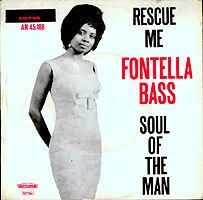
My Spotify playlist is filled with oldies and I love nothing more than a good blues or soul track. The song Rescue Me from Fontella Bass regularly blasts from my speakers as I drive between locations for work. Every time I hear it I am reminded of the desire to be rescued for someone with anxious (coercive) attachment and how those with avoidant attachment regularly fall into the trap of providing it, thinking they are doing the right thing.
Security is all about confidence
One of the most distinguishing characteristics of people with secure attachment is their confidence. When I teach confidence it often surprises students that what we see as confidence in others can often be a mismatch for the person who appears confident. It is not unusual for them to appear confident but actually to describe themselves as the opposite. This is because what we associate with the skillset of confidence is quite easy to learn. Good communicator, being able to speak up, taking charge in situations and being open and honest. However, what most of us actually associate with confidence is a feeling and that feeling is what makes someone with insecure attachment different from someone who is secure.
The person with secure attachment will experience a felt sense of confidence. They rarely doubt themselves, they trust themselves and others easily, they bounce back from setbacks and they are open to new experiences. This occurs because either in childhood, or in the current relationships, they feel a sense of unconditional acceptance. They are rarely shamed and when they do make mistakes they feel that safety net of someone who trusts them to sort it out with or without their help.
This type of confidence is visible in people who appear to have an ease about them. They are open about their flaws and and not afraid to own up to their mistakes and take responsibility for their actions. That dread of being judged and not knowing how to handle it is isn't there anymore or if they are lucky, was never their at all.
Who are these unicorns you may ask? I agree it seems unlikely that people are that comfortable in the world and yet, this is what secure attachment creates in ourselves and others and it is available to all with the right knowledge and the right communication.
The helpless and the saviour
Those if you who have read some of my other posts on attachment will know that avoidant and anxious(coercive) fit together like jigsaw pieces and where you find one you will inevitable find the other.
One of the overriding characteristics of anxious attachment, or coercive as the DMM (Dynamic Maturational Model of Attachment and Adaptation) calls it, is a fear of being abandoned. This fear leads to a deep-seated feeling that there is something fundamentally wrong with you and when others discover it, they will leave.
This back story means an individual will inadvertently test this over and over again, in the hope that at some point they will find the person who won't leave and will finally feel they are lovable after all. Unfortunately, the process of testing involves certain behaviours that both drive people away and draw them back in.
The first is a pattern of being threatening and then being disarming. Think of the child who throws a tantrum, kicks or screams or tells you they hate you. When you walk away or go quite or ignore them they adopt another tactic. They become sweet and cute, telling you they love you or doing something nice for you.
In adults this can manifest as starting argument and when it goes too far buying you flowers or cooking you your favourite meal to apologise. The threat is the test. If I am difficult will you reject me? The response from a person with avoidant attachment is often to appease until they can't handle their own feelings and then they withdraw. When the withdrawal occurs the fear of abandonment kicks in for the anxious person and then the disarming process gets activated to try and pull you back towards them, to prevent the abandonment.
Another pattern is the aggressive/feigned helplessness pattern. This is where they are more aggressive and angry than the threatening and instead of becoming disarming they act helpless and behave as if they need rescuing. Think of a child who tries to complete a task on their own and gets angry when you tr to help. Eventually, they get frustrated because the task is harder than they imagined and they get upset begging you for help. The helpless act is often in response to a parent who has walked away in exasperation from a child who is being difficult to manage and refusing help.
The crying, distressed child is a plea for you to return because of the fear of abandonment once again. The parent who has walked away, more often than not someone who has avoidant attachment, will often return and immediately fall into the trap of solving the problem confirming to their child that they are indeed helpless, fuelling their insecure attachment.
The urge to rescue
People with avoidant attachment are by default, according to the literature, natural rescuers. Unlike people with anxious attachment, their fear is not abandonment, it is rejection for not being good enough. They have usually grown up in an environment with an anxious caregiver who has made them feel responsible for their emotions. They have spent their life thinking if they could just get it right then they wouldn't get angry or upset. They try to keep everyone happy by being the fixer. They solve problems, they anticipate needs but when the other person seems to be unhappy or disappointed, they withdraw because the feelings of shame, vulnerability or fear of rejection become too much. The most common patterns found in an avoidant person that respond to the feigned helpless pattern of the anxious person, is the compulsive caregiver and the compulsively compliant.
The compulsive caregiver spends all their time shoving down their own feelings so they can look after everyone else. They try to anticipate what everyone wants, being super organised or super independent. They are the ones in families that everyone turns to when something goes wrong.
The compulsive compliance is all about perfection. They are a combination of someone who needs to get everything right and someone who often expects the same high standards from others. This is not a good mix with someone who has anxious attachment because it can feed into their feelings of having something wrong with them when they inevitably fail to meet the high standard their avoidant partner has set.
This dynamic is what keeps both parties together but is also the greatest source of conflict. When the anxious person appears helpless the avoidant person feels useful. They rush in to solve the problem. Unfortunately, the anxious person very often gets angry, as they secretly don't want you to fix, they want you to prove to them they are lovable even when they make mistakes. When the anxious person gets angry the avoidant person feels confused and ashamed and feelings are the very thing they are trying to avoid and so they withdraw. This starts the cycle again with the anxious person desperate to get them back.
Show, don't tell
When I teach creative writing, helping people to understand the difference between showing and telling is part of the course. This is the same principle that you need to apply to your relationships, especially those with your children if you want them to experience secure attachment.
When someone appears helpless the natural instinct for someone with avoidant attachment is to fix the problem for them. However, someone with secure attachment does it differently. This person demonstrates that they trust you. They make you feel like you are fully accepted and that your mistake or struggle is not a flaw buit simply something to learn. They show you how to help yourself by being there for you. They support without taking over. They let you know that they are there no matter what and that they won't reject you for failing.
The difference between showing and telling is obvious to them. The one who tells, tells you exactly what to do. They will point out what you are doing wrong and then either tell you what to do instead or do it for you. The person who shows asks questions. The find out what you need, they offer validation and acceptance and they help you only when, and with what, you have asked. They show you that you can handle this yourself. They make you feel like they trust you completely and they support with their presence and love.
Imagine the child struggling with the task again. The secure parent sees that they are struggling. They validate to their child that it is hard. They show them that they trust them with their words and actions and they ask the child what they need. When the child tries to get them to rescue them, completing the task, they help the child to understand how to do it themselves but more importantly that they can do it. They stay close by and help when it gets hard but they wait to be asked for help.

Not enough resilience
According to Jonathan Haidt in his book the Anxious Generation we have made the world too over-protected for children. From the perspective of attachment theory this would explain why so many children are presenting with anxiety. When children cannot try and fail without being rescued or judged they fail to develop resilience. They struggle to identify their own strength or the boundaries of their own skillset. If parents jump in to rescue their child from hardship or heartache, rather than show them that they trust them and that they can cope, then they will naturally feel like their is something wrong with them.
It is also important to remember that attachment patterns don't emerge in a vacuum. The more anxious patterns a child displays the more avoidant a parent will become with them. The patterns emerge in response to a pattern which is why we can have different patterns with different people. The more extreme the pattern becomes the more extreme the pattern in response and so on and so on.
If you want to change the pattern you have to acknowledge your own attachment patterns first. These are not character flaws or failures they are adaptations that are needed to make relationships work. If you want to change them then you need to know when you are using an insecure pattern and what the secure alternative is that you can use instead.
Creating security
One of the greatest lessons I have learned about attachment is the importance of creating secure attachment with yourself. It starts with unconditional love and trust. Before you look to be rescued ask yourself if you trust yourself to do it yourself. Before you go to save someone ask youself if you can trust them enough to try and maybe fail without you judging them or making them feel like they are flawed.
When the voice in your head tells you that there is something wrong with you or that you are not good enough, show it love. Tell it you know it is trying to protect you but that you have got this. Focus on what it is about you that is lovable. Live by your values and be the version of yourself that you love the most. When you fail, and you will, show yourself that you love yourself anyway.
When you treat yourself with unconditional acceptance and love, it is hard not to do it with others. Gradually, you will see and feel the shift towards security with others. You will learn to trust yourself and others and will find the old patterns of helplessness and rescue start to disappear.
If you need help with this then you can also do a 6 session bespoke coaching programme where we examine the attachment patterns in your relationships and develop secure ways of responding that create better outcomes for both you and your loved ones. Once you know what to spot then you will find it easy to do the work yourself.
Interested in coaching, then book a free discovery session.
Thanks for reading. I hope our paths cross again in future.
Love,
Elfreda


Comments